How to Choose the Best Chrome Sliding Shower Doors?
Choosing the right Chrome Sliding Shower Doors can change how a bathroom feels, functions, and ages. The glass may look simple, but daily performance depends on measurements, hardware, installation, and maintenance. A door that glides quietly today should still operate smoothly after years of steam, water, and repeated use.
Start with the shower opening. Measure the width at the top, middle, and bottom because walls are not always perfectly square. Check the height, threshold depth, and available clearance beside nearby fixtures. Tempered safety glass is essential, while corrosion-resistant rollers and sturdy tracks support dependable operation. These details matter more than a highly polished product photograph.
Style still deserves attention. Clear glass can make a compact enclosure feel larger, while textured glass offers more privacy. Chrome hardware reflects light and pairs well with many faucets, yet it may show water spots quickly. That is not a dealbreaker. It simply requires regular drying and gentle cleaning. Some choices also involve compromise: thicker glass feels substantial but may increase weight, cost, and installation demands.
This guide considers practical experience, product construction, and trustworthy selection criteria. It explains how to compare door sizes, glass thickness, track designs, seals, finishes, and installation requirements. Manufacturer instructions and local building requirements should always be checked before purchase. Small errors can create leaks or poor alignment. Even experienced homeowners can miss them. Careful planning remains the safer choice.
Define Your Shower Space and Installation Requirements
Before choosing a chrome sliding shower door, measure the finished opening—not the framing or bare studs. Record the width at the top, middle, and bottom, since tiled walls can slope slightly. Measure the opening height too, and note handles, shelves, and faucets that might obstruct the panels. Small details matter.
The National Kitchen & Bath Association’s Kitchen & Bath Planning Guidelines recommend a shower interior of at least 36 by 36 inches. Treat that as a planning reference, not proof that every sliding door will fit. Compare your measured opening with the door’s stated adjustment range, and check whether its track needs a flat, level curb. A few millimeters can affect alignment. I once underestimated how much a projecting handle could interfere; measurements alone do not show every practical obstacle.
Also define the installation conditions before ordering. Identify whether the walls are stud-backed or masonry, where plumbing lines run, and whether the curb is level. Check the manufacturer’s instructions for required clearances and anchoring methods. If drilling locations are uncertain, ask a qualified installer to inspect the wall first. Don’t guess. Keep a note of the three width measurements and take a close-up photo of the curb; it may feel fussy, but it can prevent an awkward fit.
Compare Chrome Finishes, Glass Types, and Door Designs
How to Choose the Best Chrome Sliding Shower Doors?
Chrome finishes change the bathroom’s visual temperature. Polished chrome reflects light sharply and suits white tile, while brushed chrome hides fingerprints better. The 2024 Houzz U.S. Bathroom Trends Study reported that 78% of renovating homeowners upgraded their showers. That demand makes finish selection more practical than decorative. Check the surface under warm lighting. Some polished coatings look colder than expected.
Glass thickness and safety matter more than shine. Tempered glass is the standard choice for shower enclosures, but thicker glass can feel more stable during daily use. ANSI Z97.1 provides performance requirements for safety glazing. Ask for documentation, not just a showroom promise. Clear glass enlarges a compact room, while textured or frosted glass improves privacy. Yet textured glass may collect mineral deposits around its pattern.
Tips: Measure the opening at the top, middle, and bottom. A small wall variation can affect sliding alignment. Choose stainless rollers with sealed bearings, and inspect the bottom track for easy cleaning. The National Kitchen & Bath Association’s 2024 design trends report continues to identify larger, more open showers as a strong preference. Still, wider doors need adequate wall clearance. I once favored the widest opening, but maintenance became harder than expected. A slightly narrower design may work better in a busy household.
How to Choose the Best Chrome Sliding Shower Doors?
Compare chrome finishes, glass types, and door designs by starting with the typical glass thickness used for each sliding-door construction.
Selection Guide
- Polished chrome: Bright and reflective, making a bathroom look more spacious. It requires regular drying to reduce visible water spots.
- Brushed chrome: A softer satin appearance that generally disguises fingerprints and minor water marks better than polished surfaces.
- Clear glass: Provides the most open visual effect and typically allows the highest light transmission.
- Frosted, tinted, or patterned glass: Offers greater privacy but usually reduces visibility and light transmission.
- Door design: Framed systems commonly use thinner glass, while semi-frameless and frameless sliding doors typically require thicker glass for stiffness and stability.
The thickness values shown are typical industry choices for residential sliding shower doors. Always confirm the required glass thickness, hardware capacity, and safety-glazing compliance with the installation instructions for the selected system.
Evaluate Door Size, Sliding Mechanisms, and Hardware Quality
How to Choose the Best Chrome Sliding Shower Doors?
Size comes before style. Measure the finished opening at the top, middle, and sill; walls are rarely perfectly parallel. Use the smallest measurement, then compare it with the door’s adjustment range. For example, a 60-inch opening may need a door designed for uneven walls, not a nominal 60-inch panel. Houzz’s 2024 U.S. Bathroom Trends Study reports that 78% of homeowners upgraded their shower. That demand makes accurate measuring more important, not less. Do not guess. Check the available entry width, especially for children, older adults, or limited mobility.
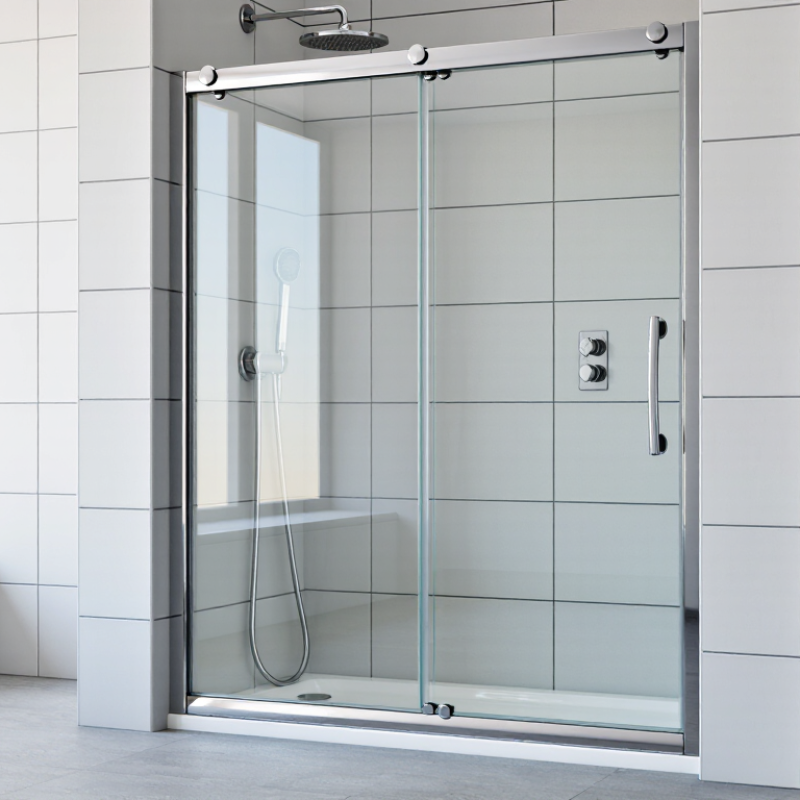
Inspect the sliding mechanism before admiring the chrome finish. Top-hung rollers usually keep the sill easier to clean, but they need a rigid header. Bottom rollers may simplify installation, yet debris can affect movement. Test the rollers repeatedly. Grinding, wobbling, or sudden stopping suggests weak alignment or poor bearings. Look for corrosion-resistant stainless-steel hardware, replaceable rollers, firm handles, and continuous seals. Chrome should appear even around edges and fastener holes. Ask for coating and corrosion-test documentation; shine alone proves little. Select safety glass marked to applicable standards, such as ANSI Z97.1 or 16 CFR 1201. Harvard’s Joint Center for Housing Studies valued U.S. remodeling spending at $472 billion in 2022, showing how much homeowners invest in upgrades. Still, expensive hardware is not automatically better. Installation tolerances, cleaning habits, and overlooked wall movement can decide long-term performance.
Check Safety Features, Maintenance Needs, and Water Resistance
How to Choose the Best Chrome Sliding Shower Doors?
Safety should guide every chrome sliding shower door decision. The U.S. Consumer Product Safety Commission requires safety glazing for shower enclosures under 16 CFR Part 1201. Look for tempered glass tested to ANSI Z97.1.
Check the glass edges carefully. Chips near corners can become serious weak points. Choose doors with smooth rollers, secure handles, and a stable bottom guide. A professional installer should verify wall support and alignment, not only appearance.
Water resistance depends on design and daily habits. Overlapping panels, magnetic seals, and a sloped sill help direct water inward. Still, no seal stays perfect forever. The U.S. Environmental Protection Agency’s Mold Remediation guide recommends drying wet materials within 24–48 hours.
Wipe the lower track after bathing, especially where water collects behind rollers. Chrome looks clean, but mineral deposits can quickly dull its surface. Use a soft cloth and mild cleaner. Avoid abrasive pads, which may scratch the finish and damage seals.
Tips: Ask for the enclosure’s water-test method, glass thickness, replacement-seal availability, and warranty terms. Measure twice. Leave installation to a qualified professional when walls are uneven. My practical mistake was judging a door by its shine alone. Drainage, ventilation, and maintenance matter more after the first week.
Balance Product Quality, Installation Costs, and Warranty Coverage
Choosing chrome sliding shower doors requires more than matching a bathroom’s finish. Look for certified tempered safety glass, smooth rollers, rigid frames, and corrosion-resistant hardware. Chrome can hide early pitting, especially near salty water or strong cleaners. Check the glass thickness, adjustment range, replacement-part availability, and drainage design. Small details matter.
Installation costs can change the decision quickly. Angi’s 2024 Cost Guide estimates shower door installation at roughly $600 to $1,900, depending on door type, opening conditions, and labor. A heavy door may need reinforced walls or additional leveling work. Houzz’s 2024 U.S. Bathroom Trends Study reports a $35,000 median spend for major bathroom renovations. That figure is not a door budget, but it shows how installation errors can become expensive.
Measure twice.
I would not assume a low quote is better. Ask whether removal, waterproofing checks, haul-away, and final adjustment are included.
Warranty coverage should be compared in writing. Confirm separate periods for glass, rollers, seals, frame finish, and labor. Some warranties exclude corrosion, incorrect cleaning products, or poor installation. Others cover parts but not service visits. The International Code Council and safety-glazing standards support using compliant tempered glass, but compliance does not guarantee flawless operation. Keep the invoice, care instructions, and installation record. A reflective choice is useful here: paying slightly more for accessible parts may prevent a complete door replacement later.